Stress Isn’t Always a Bad Thing
Stress is often viewed as something negative in aviation, but the relationship between stress and performance is more nuanced. In fact, a moderate amount of stress can actually improve performance by increasing alertness and focus.
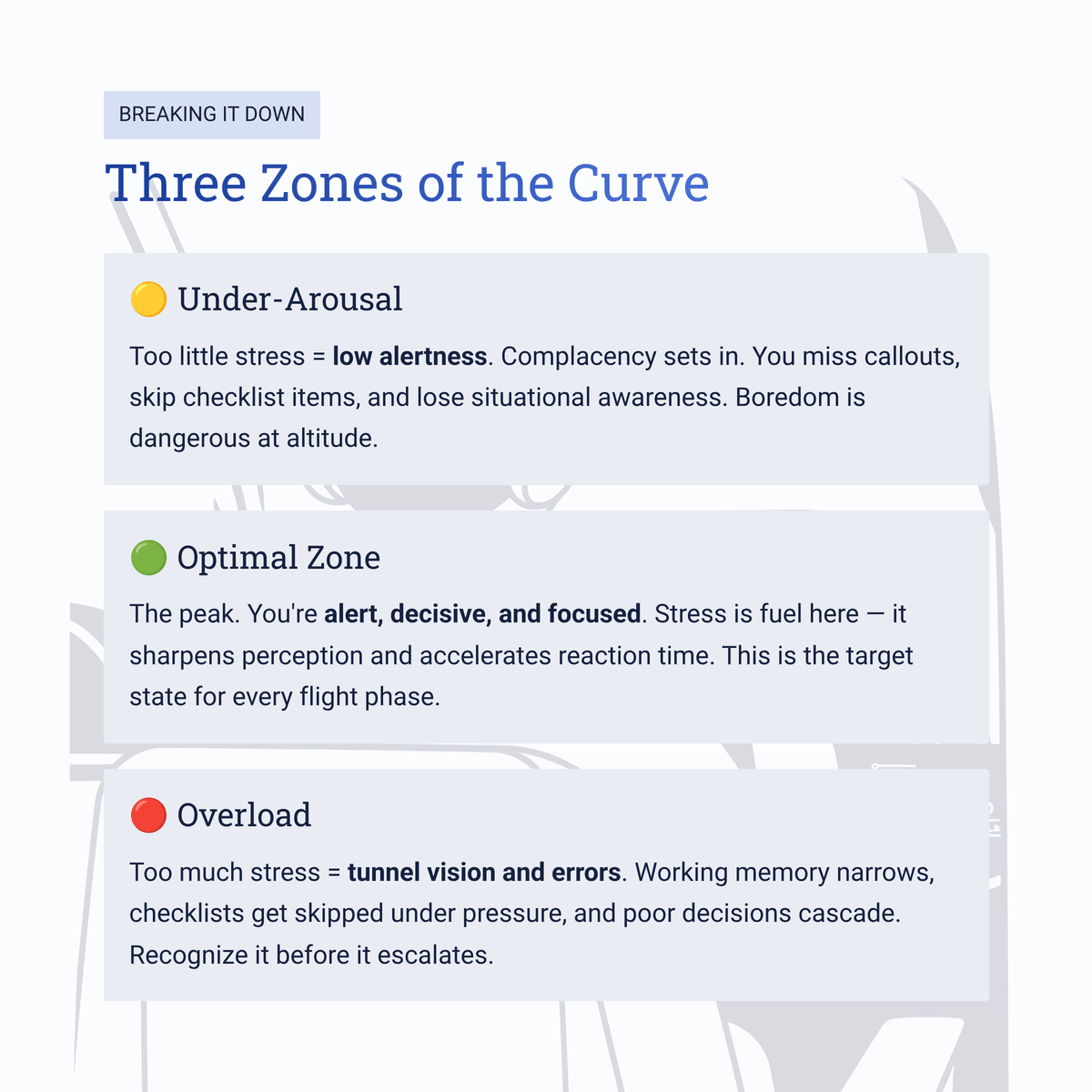
As stress begins to rise, performance typically improves. A certain level of pressure helps pilots stay engaged, attentive, and responsive to the task at hand. This is why a pilot may perform very well during challenging situations such as a checkride or a demanding approach. This is known as the Yerkes-Dodson Curve.

Performance generally increases as stress rises, up to an optimal point. At this level, pilots are focused, alert, and operating at their best. The right amount of stress can sharpen situational awareness and help pilots stay mentally engaged with the task.
When Stress Becomes Too Much
However, this relationship only holds up to a point. Once stress exceeds a pilot’s ability to cope, performance begins to decline rapidly. Excessive stress can lead to task saturation, poor judgment, and mistakes in the cockpit.
This is why high-workload situations—such as deteriorating weather, equipment issues, or unexpected changes in flight conditions—can quickly overwhelm a pilot if stress levels become too high.
The Goal: Optimal Stress
The goal is not to eliminate stress entirely. Instead, the objective is to maintain stress within an optimal range where it enhances performance rather than degrades it.
Understanding this relationship helps pilots recognize when stress is increasing and take steps to manage workload before performance begins to deteriorate.
Effective stress management is an important part of aeronautical decision-making. Training, experience, and good workload management all help pilots maintain that optimal balance where performance remains at its best.